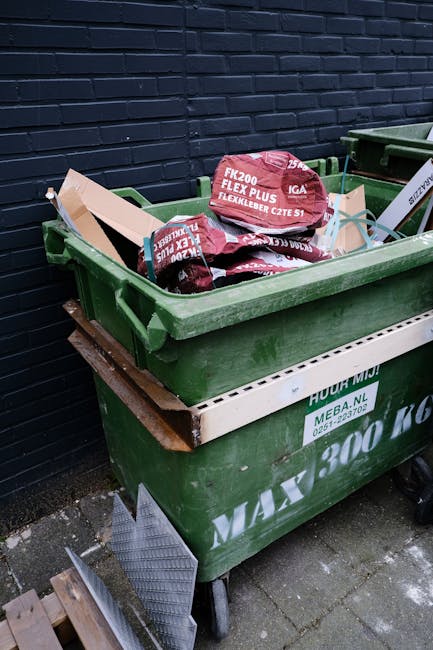
Waste removal South Acton Estate before and after: what changes, what to expect, and how to get it right
If you are looking at a cluttered flat, a builder's mess, or a pile of old furniture and thinking about Waste removal South Acton Estate before and after, you are probably not just after a tidy room. You want the whole feeling of the place to change. Less stress. More space. A cleaner hallway, a usable bin area, maybe even that slightly unbelievable moment when the room looks bigger than you remembered. That is the real value here.
This guide breaks down what a typical before-and-after waste removal job looks like on South Acton Estate, how the process works, who it helps most, and the practical details that often get missed. No fluff, no vague promises. Just the sort of advice that helps you plan properly and avoid the classic "we'll deal with it later" headache. Let's face it, later usually turns into never.
Whether you are dealing with a one-off junk clear-out, a flat clearance, bulky furniture, or mixed household rubbish, the same basic principles apply: prepare well, choose the right service, and make sure the end result is more than just an empty room. It should feel sorted.
Why Waste removal South Acton Estate before and after Matters
The before-and-after effect matters because waste removal is never just about shifting items from one place to another. On South Acton Estate, where homes can be compact and access may be tight in places, a clear finish can make a genuine difference to daily life. A hallway blocked by old boxes or a balcony full of broken bits can quickly start to feel smaller than it really is.
The before state usually brings a mix of problems: visual clutter, awkward smells, trip hazards, and that low-level background stress of knowing something needs doing. The after state should bring the opposite: safer movement, easier cleaning, better use of the space, and a noticeable lift in how the home feels.
That emotional change is real. In our experience, people often focus on the rubbish itself, but what they remember later is the relief. The room breathes again. The light comes back. You can open a cupboard without moving three things first. Simple, but powerful.
It also matters from a practical point of view. A good clearance can support a move, a tenancy handover, a refurbishment, a probate process, or just a reset after a difficult period. If a property is being prepared for sale or rent, the after-photo has real value too. Clean, open spaces tend to photograph better and feel easier to view. No mystery there.
How Waste removal South Acton Estate before and after Works
Most jobs follow a fairly straightforward pattern, even if the property itself looks daunting at the start. The process usually begins with a quick assessment of what needs removing, how much there is, and whether anything needs special handling. That might include mattresses, a fridge, broken furniture, builder's rubble, or mixed household waste.
For many customers, the "before" stage is a photo or a brief description sent in advance. That helps narrow down the right approach and avoids surprises on the day. If the load is mixed, the team will often sort items as they remove them so recyclable material can be separated from general waste where possible. This is one reason a proper service feels different from a quick tidy-up with a van. It is more organised, and honestly, that matters.
On the day, the crew will usually arrive, confirm the load, work out access, and begin removing items safely. In a flat or estate setting, this often means protecting walls, keeping communal areas clear, and moving carefully through stairwells or lifts. Good waste removal is not glamorous. It is methodical. A bit of lifting, a bit of sorting, a bit of common sense.
The after stage should include a clear sweep of the area so you are not left with stray debris or awkward leftovers. A solid end result means the space is left ready for the next step, whether that is cleaning, decorating, letting, or simply enjoying the room again.
For larger or more structured clearances, services such as house clearance, flat clearance, garage clearance, and loft clearance can be a better fit than a general one-off uplift. Picking the right type of service keeps the before-and-after transformation cleaner and smoother.
Key Benefits and Practical Advantages
A good waste removal job gives you more than a cleared floor. Here are the benefits people usually notice first:
- More usable space: rooms, hallways, storage areas, and outdoor spots become practical again.
- Less stress: the visual pressure of clutter drops fast. Very fast, sometimes.
- Safer access: fewer trip hazards, blocked exits, and unstable piles.
- Better hygiene: old waste, packaging, food-related mess, or damp items can be removed properly.
- Improved presentation: useful for lettings, sales, inspections, or family handovers.
- Faster next steps: decorating, cleaning, repairs, or moving can happen without delay.
There is also a quieter benefit that people do not always mention: decision fatigue goes down. When a room is full of unwanted items, every task becomes harder. Once the waste is gone, the place becomes easier to manage. You can actually see the next job. That helps a lot.
For families, landlords, and property managers, the after-effect can be especially useful because it gives a property a cleaner baseline. For businesses or home-based setups, a tidy environment can make working easier too. If you are dealing with mixed waste or commercial items, the right route might be business waste removal or commercial waste collection rather than a general household clear-out.
Who This Is For and When It Makes Sense
This kind of waste removal makes sense for a wide mix of people. Some are in the middle of a move, some have inherited a property, some are simply clearing years of accumulated stuff after a busy stretch of life. That happens more often than people admit.
You may be a good fit if:
- You need a flat, maisonette, or estate property cleared quickly.
- You have bulky items that are awkward to move alone.
- You want a property left in a presentable state after tenant turnover.
- You are dealing with renovation debris or builder's waste.
- You need a respectful, practical solution after a bereavement or probate process.
- You are overwhelmed by clutter and want a manageable first step.
It can also make sense when council collection options are too slow, too limited, or not suitable for the amount or type of waste you have. For example, a single item may be fine under a council scheme, but a mixed load of furniture, broken items, and packaging usually needs something more flexible. In those cases, looking at bulky waste collection or bulk waste collection can be the more practical route.
Truth be told, if the thought of sorting everything yourself is already exhausting, that is usually a sign you should not force it alone. The job is the job. There is no medal for dragging a wardrobe downstairs at 9 p.m.
Step-by-Step Guidance
If you want the best before-and-after result, it helps to follow a proper sequence. Here is the simplest way to approach it.
- Walk the space first. Identify what is going, what is staying, and what might need specialist handling.
- Group items by type. Furniture, white goods, garden waste, mixed rubbish, and reusable items should be considered separately where possible.
- Check access. Stairs, lifts, narrow corridors, parking restrictions, and entry points can all affect the job.
- Remove valuables and personal items. This sounds obvious, but in a busy flat it is easy to miss a folder, charger, or set of keys.
- Request a clear price or estimate. Ask what is included, whether lifting is covered, and whether loading, disposal, and labour are all part of the quote. The page on pricing and quotes is useful if you want to understand how that side is handled.
- Choose the right service type. Match the job to the load: clearance, removal, disposal, or recycling-focused collection.
- Be ready for a final sweep. The after-result should leave the area tidy and usable, not half-finished.
A small tip: keep one bag or box marked keep and one marked unsure. The unsure pile can be reviewed later rather than clogging up the room again. It is a tiny thing, but it helps.
For specific item types, it can be worth matching the service to the object rather than treating everything as generic rubbish. For instance, sofa removal, mattress disposal, fridge disposal, and white goods recycle can all suit different kinds of loads and handling needs.
Expert Tips for Better Results
The best before-and-after jobs are usually the ones that were planned with a bit of realism. Not perfection. Just realism.
- Take photos before the clearance. This helps you track what changed and can be useful for tenants, landlords, or family members.
- Be clear about what stays. If something is staying in the property, move it out of the way or label it well.
- Ask about recycling. Many loads can be separated, especially metal, wood, cardboard, and certain furniture items. Services linked to recycling and rubbish or waste recycling can be a better fit if you care about disposal outcomes.
- Think about the finish, not just the uplift. Will the room need a sweep, wipe-down, or repair after the waste is gone?
- Leave access clear. A few minutes spent moving a bike, pram, or planter can save a lot of time later.
- Plan around neighbours. In estate settings, a quiet, tidy, respectful job goes a long way.
One practical observation from jobs like this: the final 10% matters disproportionately. The room may be cleared, but if a corner is left full of odd scraps or one stubborn item is forgotten behind a door, the after-image feels incomplete. A decent team notices that. So should you.
If the property is sensitive or the situation has a personal dimension, ask for a calm, respectful approach. That is particularly relevant with probate clearance, probate house clearance, or property clearance, where the practical work and the human side go hand in hand.
Common Mistakes to Avoid
Most clearance problems come from rushing or assuming too much. The good news? They are avoidable.
- Leaving the sort-out until the last minute. This often leads to lost items and a messy handover.
- Underestimating access issues. A narrow stairwell can change the whole plan.
- Mixing keepers with waste. Once items are piled together, mistakes happen.
- Choosing the wrong service for the load. A single-item pickup is not the same as full clearance.
- Ignoring special items. White goods, mattresses, and large furniture can need specific handling.
- Assuming every provider works the same way. They do not. Ask how removal, loading, disposal, and recycling are handled.
Another common one: people focus so hard on the before state that they forget the after state needs care too. If you are doing a property refresh, make sure the room is actually ready for cleaning or decorating once the waste has gone. Otherwise, you clear it and then stare at a second job you did not budget for. Bit annoying, really.
Tools, Resources and Recommendations
You do not need specialist equipment for every job, but a few simple tools make the process much easier:
- Strong gloves and sturdy shoes
- Heavy-duty bin bags
- Marker labels or sticky notes for items to keep
- Cardboard boxes for sorting smaller contents
- Dustpan and brush for the final sweep
- Tape or straps for securing awkward items
For more complex jobs, the most useful resource is usually a service that covers the right category of waste from the outset. For example, builders waste clearance is much more suitable than general rubbish removal if the load includes rubble, offcuts, or renovation debris. Likewise, garden clearance or garden waste clearance is better for cuttings, soil, and outdoor waste than a mixed household collection.
It can also help to compare what you have with the service page names before you book. If you have sofas, beds, office furniture, or a mixed office unit, then services like furniture clearance, bed disposal, office clearance, and office clearances can be more relevant than a general rubbish collection. Matching the service properly usually improves both the process and the result.
Law, Compliance, Standards and Best Practice
For waste removal in the UK, the safest approach is to work with a provider that handles waste responsibly, keeps clear records where required, and follows sensible health and safety practice. You do not need to become a compliance expert yourself, but you should expect basic professionalism.
That usually means:
- Waste is handled and transported safely.
- Loads are not left where they could create hazards in communal areas.
- Potentially recyclable material is separated where practical.
- Staff work carefully in line with stated health and safety practices.
- Insurance and safety arrangements are clear enough to give you confidence.
If you want to check how a provider approaches these areas, pages such as health and safety policy, insurance and safety, terms and conditions, and recycling and sustainability are useful places to look. They help you understand the service beyond the sales pitch, which is always a good sign.
Best practice also means being honest about access, load type, and urgency. If you say it is a small clear-out but it is really a full property job, the end result is more likely to go wrong. No drama, just being straight about it makes the whole thing smoother.
Options, Methods, or Comparison Table
If you are deciding how to handle waste removal on South Acton Estate, it helps to compare the usual options side by side.
| Option | Best for | Pros | Trade-offs |
|---|---|---|---|
| Council collection | Smaller, straightforward items | Simple for limited loads | May be slower and less flexible |
| General rubbish removal | Mixed household waste and one-off clear-outs | Convenient, fast, adaptable | Needs good communication on load size |
| Bulky item collection | Sofas, beds, white goods, furniture | Suited to awkward, heavy items | May need extra detail on access |
| Specialist clearance | Flats, lofts, probate, hoarding, business premises | More tailored, often more efficient | Best when the job is clearly defined |
For a simple "before and after" transformation, a flexible removal service is often the cleanest route. For larger or more specific jobs, a tailored clearance is usually better. It comes down to the type of waste, the building layout, and how quickly you want the space back.
Case Study or Real-World Example
Here is a realistic example. A resident on South Acton Estate had a one-bedroom flat where a spare room had slowly turned into a storage zone: a broken wardrobe, a mattress, a couple of old chairs, boxes from deliveries, and a few bags that had been waiting for "when there's time". There is never time, of course, until there really is.
Before: the room was hard to enter properly, cleaning was awkward, and the space was being wasted. The resident also felt embarrassed about showing visitors the flat, which is a pretty common feeling and nothing to be ashamed of.
During: the load was separated into furniture, soft items, and mixed waste. The mattress and chairs were removed first to open the route through the flat. Smaller items were gathered next, and the floor was swept at the end so the room was immediately usable.
After: the room could actually function as a bedroom again. Even better, the flat felt calmer because the clutter no longer dominated the view from the doorway. The resident later said the biggest difference was not the empty floor. It was being able to think clearly in the room again. That sounds dramatic, but honestly, it happens.
This kind of result is exactly why before-and-after waste removal matters. It is not just about disposal. It is about resetting the space in a way that supports whatever happens next.
Practical Checklist
Use this quick checklist before you book or begin:
- Have you listed everything that needs removing?
- Have you separated keep items from waste?
- Are any items hazardous, heavy, or awkward?
- Is access clear for the removal team?
- Have you checked whether you need a specialist service?
- Do you know whether recycling is part of the plan?
- Have you asked about pricing and what it includes?
- Will the space need cleaning after removal?
- Have you removed personal documents and valuables?
- Do you want a photo record of the before and after?
Key takeaway: the best waste removal results come from clear preparation, the right service match, and a proper finish. That is the formula. Nothing fancy, just good practice done well.
Get a free quote today and see how much you can save.
Conclusion
Waste removal South Acton Estate before and after is really about transformation you can see and feel. The before stage can be messy, noisy, cramped, and mentally draining. The after stage should be the opposite: open, safer, calmer, and ready for whatever comes next. That might be a move, a clean-up, a redecoration, or simply a bit of peace at home.
If you approach the job with a clear plan, realistic expectations, and the right kind of service, the result is usually better than people expect. Not perfect, maybe. But properly improved. And sometimes that is exactly what is needed.
When a room finally clears and you can hear your own footsteps again, there is a certain relief in it. Small thing, maybe. But a good one.
Frequently Asked Questions
What does Waste removal South Acton Estate before and after usually involve?
It usually means clearing unwanted items from a flat, room, or shared area and leaving the space tidy, usable, and easier to manage. The before stage is the clutter or waste load, and the after stage is the cleared result.
How long does a typical waste removal job take?
It depends on the amount of waste, access, and whether the items are bulky or mixed. A small load may be done quickly, while a fuller clearance can take longer. The best approach is to describe the job clearly in advance.
Can waste removal on South Acton Estate handle bulky items like sofas or mattresses?
Yes, in many cases. Items such as sofas, beds, and mattresses often need specific handling, so it is sensible to match the service to the item. That usually leads to a cleaner and simpler result.
Is it better to use council collection or a private waste removal service?
It depends on the job. Council options can be fine for limited items, but private waste removal is often more flexible for mixed loads, larger clear-outs, or situations where time matters.
What should I do before the removal team arrives?
Remove valuables, label anything staying, clear the access route if you can, and make sure you know which items are going. A little preparation makes the whole process smoother.
What happens after the waste is removed?
You should be left with a clear, usable space and ideally a proper sweep-up. Depending on your plans, you may then clean, decorate, move furniture back in, or prepare the property for handover.
Can waste removal help with a probate property or inherited flat?
Yes. In those cases, a respectful and organised clearance can make the process much easier. Probate-related clearances often need a calmer, more careful approach than a standard rubbish uplift.
Do I need to sort recyclable items myself first?
Not always, but separating obvious items can help. Many providers will sort loads where practical, especially if recycling is part of the service. If in doubt, ask before the job begins.
Will a waste removal service take away mixed rubbish and furniture together?
Often yes, provided the load is described clearly. Mixed loads are common in real homes, especially after a move or clear-out. The key is being upfront about what is included.
How do I know which service is the right one for my job?
Start with the type of waste, then think about the amount, access, and urgency. For example, general rubbish, bulky items, furniture, white goods, and full property clearances may all need slightly different approaches.
What makes the before-and-after result look good in photos?
Good lighting, a proper sweep-up, and the removal of all obvious clutter make the biggest difference. If you are preparing a property for sale or letting, a clean floor and open sightlines can change the feel immediately.
Is it worth paying for professional waste removal instead of doing it myself?
For many people, yes. If the items are heavy, the access is awkward, or the load is larger than expected, professional removal saves time, effort, and a fair bit of stress. Sometimes the sensible choice is the easiest one, which is nice for a change.